

Every Mouth Be Fed: What a Communal Meal Taught Me About Resistance
Feeding people is an act of holy resistance. As forced starvation and a prolonged humanitarian blockade in Gaza reach catastrophic and irreversible levels, I find myself grieving, raging, and praying a lot about food: its necessity for survival, and its power to sustain and inspire our collective flourishing. As I hold the weight of these atrocities close, I keep returning to the memory of a communal meal that has offered me a vision for the world we are called to build.
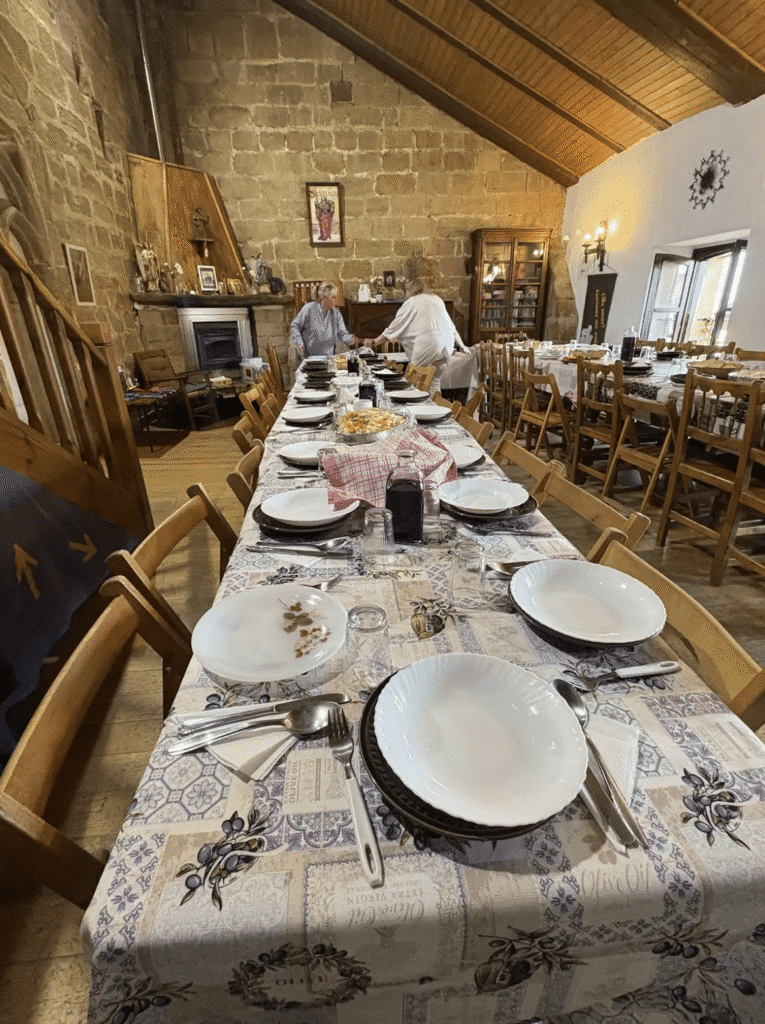
Earlier this summer, my spouse and I walked the Camino Frances, a 500 mile pilgrimage across northern Spain to Santiago de Compostela, the ancient burial place of Saint James. While the walk itself was a gift beyond measure, we found ourselves deeply consoled by our many experiences of community and hospitality along the Way. One of the most unexpected, grace-filled nights of our Camino happened in a humble church in the town of Grañón. We stayed in the San Juan Bautista Albergue, a donation-based “donativo” shelter run entirely by the generosity of volunteers, parishioners, and pilgrims.
This place is simple. Pilgrims sleep in the choir loft of the parish church. There are no beds, only mats on the floor. Each evening, the community of pilgrims that has gathered prepares a communal meal together. If more pilgrims arrive than the church can hold, the town opens its nearby rec center to ensure everyone has a place to rest. No one is turned away, everyone is fed, and everyone is welcome.
We arrived at this particular donativo in the early afternoon and were quickly invited to help prepare dinner. We cherish any opportunity to feed people, so stepping into the kitchen just felt right. The ingredients we had to work with were beyond random. Anyone who has cooked in a communal kitchen will know something about this. A bit of leftover chorizo, some half-squeezed lemons, some stale crusty bread. Only two onions but a huge amount of leeks. We figured we’d go with our standbys, pasta and meatballs and a big vat of soup, and sneak in as many odd ingredients as we could.
As the meal got closer, the number of hungry pilgrims grew from 10 to 45, and I started getting nervous. Is this really going to feed all these people? I counted the potatoes again. I worried that the soup would be bland with no celery and only one onion. I wondered if we had made a mistake by saying yes to cooking for so many. And then some young men from outside Bologna, Italy offered to help with the pasta sauce. Others popped their heads into the kitchen to ask how they could help. Soon, cutting boards and knives were distributed and we had a small army of choppers and dicers helping us make dinner happen. At one point, a pilgrim from Virginia turned to me and said, “This night reminds me of Stone Soup.” That children’s story about strangers coming together around an empty pot and creating a meal was happening right in front of us.
That evening, we served bowls of soup and plates of pasta and baskets of warm bread to nearly fifty pilgrims. We sat at one long crowded table, pilgrims from every corner of the world, and ate together. After all the stress and worry about having enough food, we had plenty. In fact, there were leftovers to share with hungry pilgrims the next day. My pot of Stone Soup was so unexpectedly delicious that pilgrims stopped me on the trail days later to ask, “Are you the one who made that soup in Grañón?” Together we ate, told stories, offered solace and encouragement, and marveled at this perfect, sacred moment we were sharing. A pilgrim from Germany remarked that sharing a meal with strangers had restored his faith in humanity.
Memories of that night come back to me with aching clarity when I read the news today. The contrast is jarring: a crowded table overflowing with food and community, and another corner of the world where human beings are being systematically denied even the most basic sustenance. The cognitive dissonance is deeply disturbing. How can this be so?
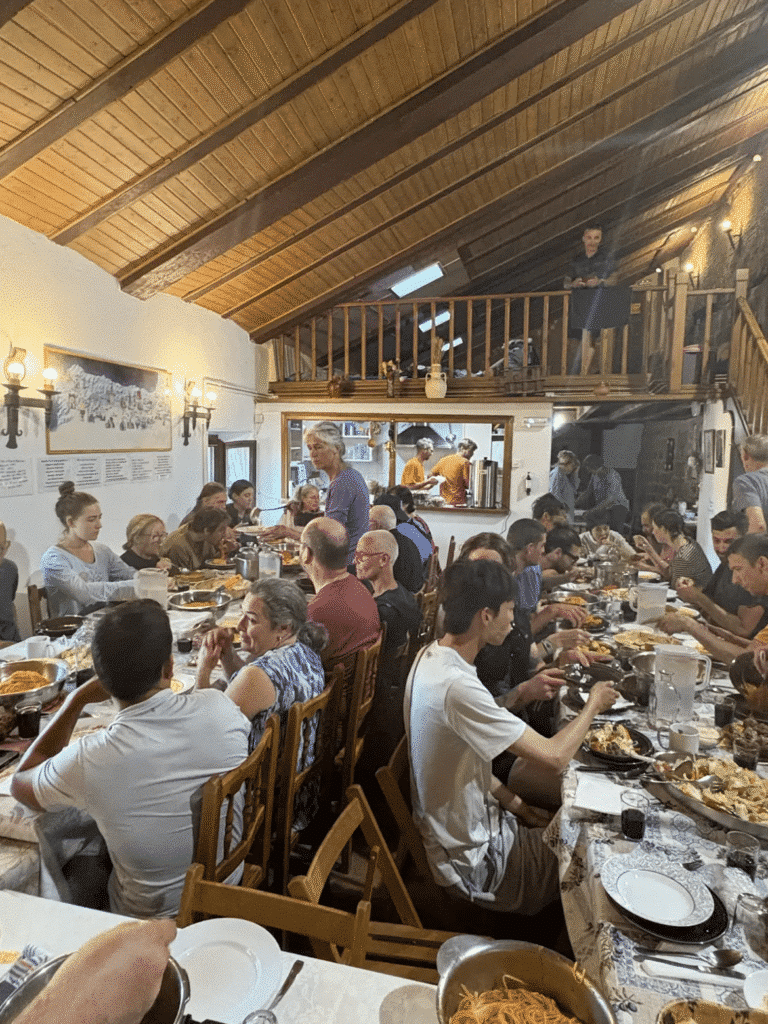
In my prayer, I keep returning to that table in Grañón. In every way, our very gathering was an act of resistance. In a world marked by isolation, scarcity, and division, simple ingredients were transformed into a nourishing meal, and strangers were transformed into a beloved community. It was a glimpse of the world God dreams for us and a resounding reminder that another world is possible.
I am reminded of the demanding vision offered in Rory Cooney’s “Canticle of the Turning,” a modern reimagining of the Magnificat. One verse in particular stays with me:
From the halls of power to the fortress tower,
Not a stone will be left on stone.
Let the king beware, for your justice tears
Ev’ry tyrant from his throne.
The hungry poor shall weep no more
For the food they can never earn.
There are tables spread, every mouth be fed,
For the world is about to turn.
What is happening to the people of Gaza stands in direct opposition to that vision. While we passed bread around a crowded table, families in Gaza are being starved by siege and stripped of their most basic human dignity. The systematic denial of food, water, and shelter employed as a weapon of empire is a moral and theological crisis for each of us. It demands that we not only grieve, but resist. Our faith cannot be passive in the face of this violence.
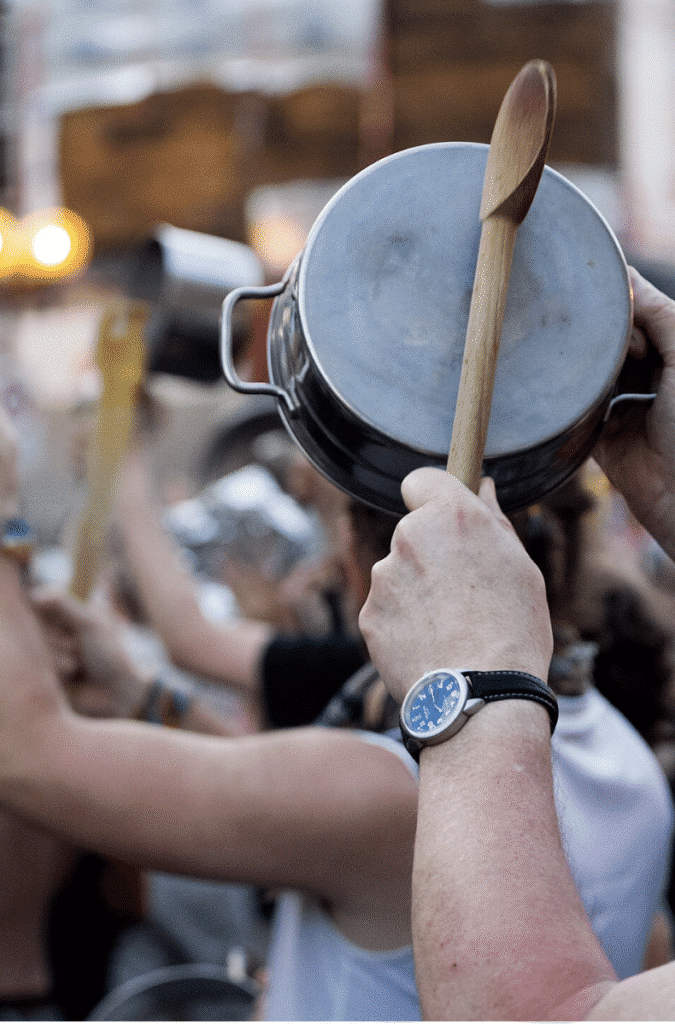
The Kin-dom of God isn’t a distant, abstract idea, it’s something we are called to practice right now. Every time we clamor for justice, welcome the stranger, share what we have, and gather around a table, we participate in this sacred world-turning. This truth fills me with immeasurable hope and a vision to keep fighting for.
So let us not underestimate the revolutionary power of gathering at a table and eating together. At our tables, may we practice resistance in our gathering, and may these meals strengthen our resolve to keep showing up, to keep speaking out, and to keep laboring for the Kin-dom, a world where every table is full and every mouth is fed.
Read more by this author and more about food justice at our website.
ABOUT THE AUTHOR

Maura Rocks currently serves as a chaplain at a Level 1 trauma hospital in Chicago, IL. She is a graduate of Catholic Theological Union and has previously worked as a high school teacher, campus minister, and spiritual director. Maura is passionate about her backyard garden, going for long walks, and building communities committed to justice, healing, and liberation.


