
Preserving Dangerous Memories
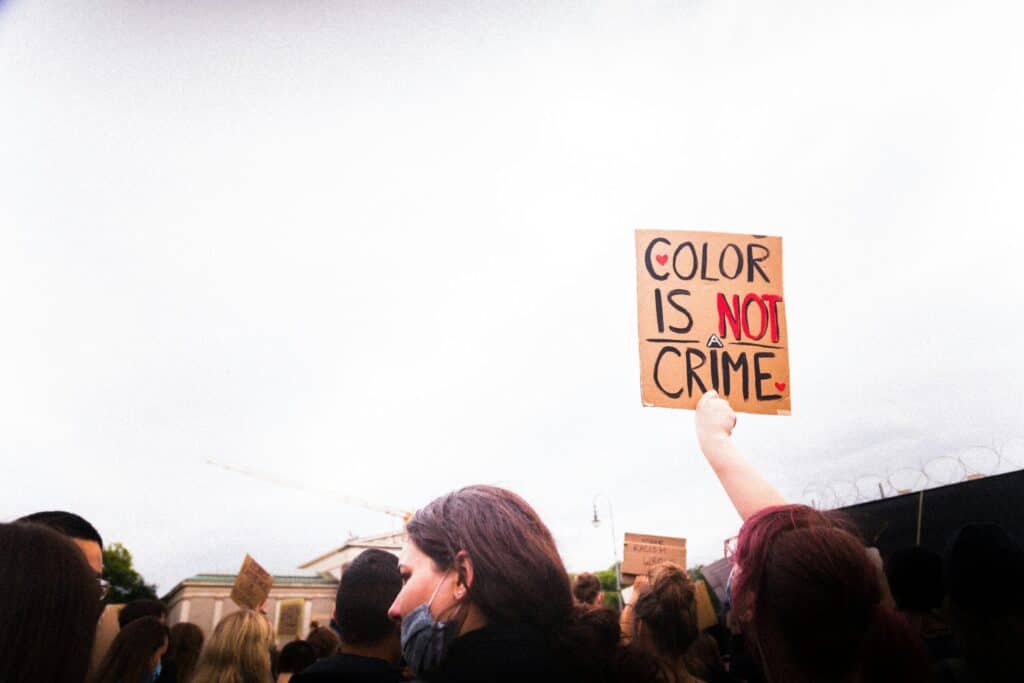
It is surprisingly easy to forget the wounds of the past, especially as a person of privilege. Last year, I took a course at Catholic Theological Union called “The Racial Justice Pilgrimage.” As part of the class, we journeyed to sacred sites of the Civil Rights Movement in Birmingham, Selma, and Montgomery, Alabama. These were sites that have been fiercely preserved by local communities.
We visited the 16th Street Baptist Church, where four young Black girls were killed in a white supremacist terrorist attack in 1963. We walked across the Edmund Pettus Bridge and reflected on the brutal police violence of Bloody Sunday. We stood on the corner where Rosa Parks boarded the Montgomery bus on the day she changed history. We went to these places to be close to the memories, in hopes that they might transform us.
Theologian Johann Baptist Metz, writing in the aftermath of the Holocaust, spoke of “dangerous memories” — memories so disruptive that they threaten to destabilize the status quo. We tell these stories to remember what has happened: to us, to our communities, to the earth. And when marginalized communities insist on telling their own stories — refusing to be silenced — we are reminded that things do not have to remain as they are. We are invited to imagine a world where injustice is no longer tolerated.
To remember is to honor, and also to warn. Memory can be a radical act of resistance.
I recently read about a community of activists in Minneapolis who have gathered every morning for the past five years at George Floyd Square. Despite numerous efforts to dismantle or significantly alter this community space, these individuals have worked tirelessly to sustain its radical and inclusive spirit. Their continued presence matters — it forces us to remember what happened in that place in 2020. In a country often plagued by collective amnesia, we need more physical reminders of our past.
Today, the group’s gatherings focus on community care and mutual aid. They’ve built a greenhouse, created youth programs, and reimagined the space — not as a site of mass protest, but as a hub for what they call “preservation as protest.” Through their presence and activism, they keep the memory of George Floyd and the global uprising that followed alive, not just for themselves, but for the city of Minneapolis and the world.

One of the most powerful stops on our Alabama pilgrimage was the National Memorial for Peace and Justice in Montgomery, a massive and solemn tribute to the thousands of victims of lynching in the United States. It was one of the most disturbing and transformative spaces I have ever encountered. While I navigated the maze of names and places honored in this space, I wrote this poem. I offer it humbly here to punctuate the impact of spaces which preserve dangerous memories:
Looking Up
I walk through a maze of metal,
each holding names.
Names that mamas gave,
names written atop essays,
signed on letters to their beloveds.
Names, given, taken, shared.
Names of people,
people with hearts and brains
and breath,
People who dreamed, who drifted, who dared
to be themselves in a world where that
is the most dangerous thing to be.
I walk amidst the names and, at first, feel nothing.
I try to pray, to imagine,
To walk a moment outside of my own shoes.
But there’s something blocking me.
So, as the pilgrim does,
I keep walking.
As I walk, the maze of metal shifts.
Slowly, my eyes draw upward.
Up.
Up, Up,
And suddenly, I’m under him, her, them.
A witness. An accomplice.
A bystander.
What is it like to watch someone suffer?
It wouldn’t be me, I say,
without much conviction or confidence.
I would have said something,
Done something.
And then I pause and think of
all the people hanging from trees
all around me.
And I am stunned
By my silence.
Places like George Floyd Square and the sites we visited on the racial justice pilgrimage remind us that memory is not passive, rather it is a living, breathing act of resistance.
What spaces around you hold dangerous memories? Where can you go to remember and be moved to act for justice?

Check out messyjesusbusiness.com to read more by this author or more on racial justice.
ABOUT THE AUTHOR

Maura Rocks is a graduate student at Catholic Theologian Union studying pastoral ministry, reconciliation, and restorative justice. She has served as a high school teacher, campus minister, hospital chaplain, and spiritual director, and is passionate about building communities committed to justice, healing, and liberation.



One Comment
Comments are closed.