The Kingdom of Heaven is Full of Mansions
I spent my early childhood in the rural South. The bulk of my social interactions were with our artists’ community of hippie Christian homeschoolers, but the folks who had been there for generations were friendly and pleasant, too. We knew the names of the shop owners in the poky little village near us. We even knew the names of their cats. Once, my father picked up a load of garden compost that turned out to be full of seeds that sprouted in his truck bed. He didn’t have the heart to uproot them, so he drove around that summer with pumpkin vines trailing, corn stalks waving. And the people he passed always waved back.
After we moved north I looked back with nostalgia at an idyllic childhood in a magical world where everyone was friendly and kind. It wasn’t until I had been gone for years that I learned that, outside the parameters of our little community, the KKK had been terrorizing Black families, and the schools in the area had still been segregated. A society that turned its friendly face to little white children had a different face, a monstrous face, for little Black ones.
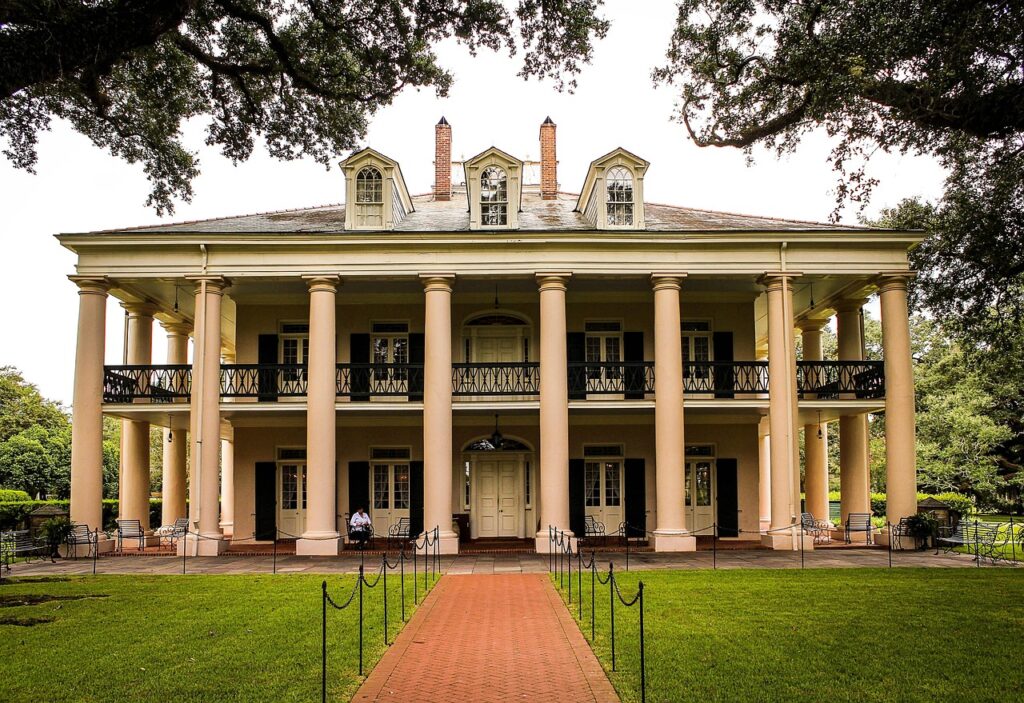
It’s easy for white folks to romanticize the American South. We even go to old plantation houses for luxury getaways. One such resort was Nottoway Plantation House, which caught fire and burned down mid-May 2025. Originally designed for a wealthy sugar baron, the mansion was the largest remaining antebellum plantation in the South, and had been converted into a resort and event venue where visitors could experience the elegant ballroom and ornate plaster friezes, relax by the pool, or enjoy a gourmet meal. The venue was especially popular for weddings.
But behind the marble pillars and stately oaks is this reality: Nottoway was built by enslaved people. While dainty ladies and dashing gentlemen traipsed up the mansion’s two grand staircases—gender segregated so men couldn’t catch a glimpse of women’s ankles—behind the scenes, 150 human beings were quartered in dingy, cramped cabins, forced to do hard labor, and beaten. The gentlemen who gallantly averted their gaze from white ladies’ ankles also raped Black enslaved women. The white masters who bought their children the best of everything stole Black children from their parents, tore families apart, destroyed lives. The beauty of Nottoway was financed by human misery.

Understandably, news of the fire provoked celebration among Black people and their allies. People made memes and posted footage of the fire with Usher’s “Burn” as a soundtrack.
Arguments that the mansion was important because it taught visitors about history were undermined by the fact that the Nottoway website says nothing about slavery. People were going, not for a somber confrontation with white America’s infamous past, but for luxury vacations. As multiple people commented, imagine having a wedding at Auschwitz.
Auschwitz, of course, is not beautiful. It looks sinister and evil. Those who believe ugliness correlates with moral heinousness might say Auschwitz tells you what it is but that idea, that ugliness means evil and beauty means goodness, is faulty. Nottoway, unlike Auschwitz, was genuinely beautiful, an architectural masterpiece. That doesn’t matter. The truth is that the plantation was not only the site of, but a monument to, ongoing moral atrocity.
As historian Kahlil Greene wrote on his Substack:
“These aren’t just beautiful old houses with complicated histories. They were purpose-built forced labor camps designed to extract maximum profit from human beings who were legally property. The pretty columns and sweeping staircases weren’t just aesthetic choices, they were advertisements, grand declarations of the owner’s wealth and status in a society where that wealth came directly from the bodies of the enslaved.”
“Lost Cause” revisionist propaganda about the antebellum South as a glorious but tragic civilization generated the “moonlight and magnolias” mystique that venues like Nottoway capitalized on. That romantic image is not only a myth, it is a narrative of moral perversion, in which the dignity of the person is sacrificed on the altar of pleasure and domination.

Yet many civilizations have accepted this moral perversion. The history of women’s fashion alone is a history of suffering for the sake of beauty. And this inversion of the moral order has a toehold in the Christian tradition, too. Though Christians tend to be critical of pleasure, especially so-called “lower” pleasures, we often treat aesthetically sophisticated pleasures as morally significant. The person who slurps down a sundae is supposedly indulging in base bodily pleasures, while the one who sighs over a sonata is being spiritual and refined. But really, they’re both aesthetic experiences that say nothing about a person’s moral nature. The sundae slurper might be a tireless advocate for justice. The sonata aficionado might be a moral monster. It’s worth noting, too, that what we consider morally significant art is usually white European art made for rich people.
Some of Christinaity’s confusion about beauty and morality might be because the term “beauty” is ambiguous. Augustine referred to God as “beauty ever ancient, ever new.” Aquinas wrote about beauty as a transcendental property of being. Were they talking about the beauty of a classical portico? No, though the pleasure one gets from art can, as Plato argued in Symposium, point toward the divine.
Not even the most majestic beauty can justify violating fundamental rights, however. This ought to be obvious, but Christian culture routinely acts as though aesthetic beauty proves something—like when traditionalist Catholics argue that preferring the old Latin liturgy is a sign of holiness versus just specific taste.

On May 29, 2025, Catholics celebrate the Feast of the Ascension, where Jesus is taken up into heaven. In the gospel reading for that day, Jesus says he is sending his disciples to preach repentance and the forgiveness of sins. Imperial Rome, where many of Jesus’ early followers were brutally murdered, was a civilization filled with art and beauty predicated on suffering and enslavement. That today’s civilization mimics the decadent inequality of Rome signifies that we have more repenting to do. For white Christians in the United States, this means getting past fantasy versions of history and facing the truth about our collective past.
“In my Father’s house are many mansions,” Jesus says in the gospel of John. It seems strange to think about longing for mansions in heaven, since that feels like a prosperity-gospel take on the afterlife. But maybe this is because, in most of our cultures, mansions have been symbols of injustice. Not so in the kingdom of heaven. There, the mansions are for everyone.
In the meantime, you can find videos online of Nottoway burning. It’s kind of beautiful.
Read more Messy Jesus Business about confronting white supremacy, racial reconciliation, beauty, and more written by Rebecca.
ABOUT THE AUTHOR

Rebecca Bratten Weiss is a writer and academic residing in rural Ohio. She is the digital editor for U.S. Catholic magazine and can be found at rebeccabrattenweiss.com.